SEARCH
The Dignity of Money
Money, Embracing Times
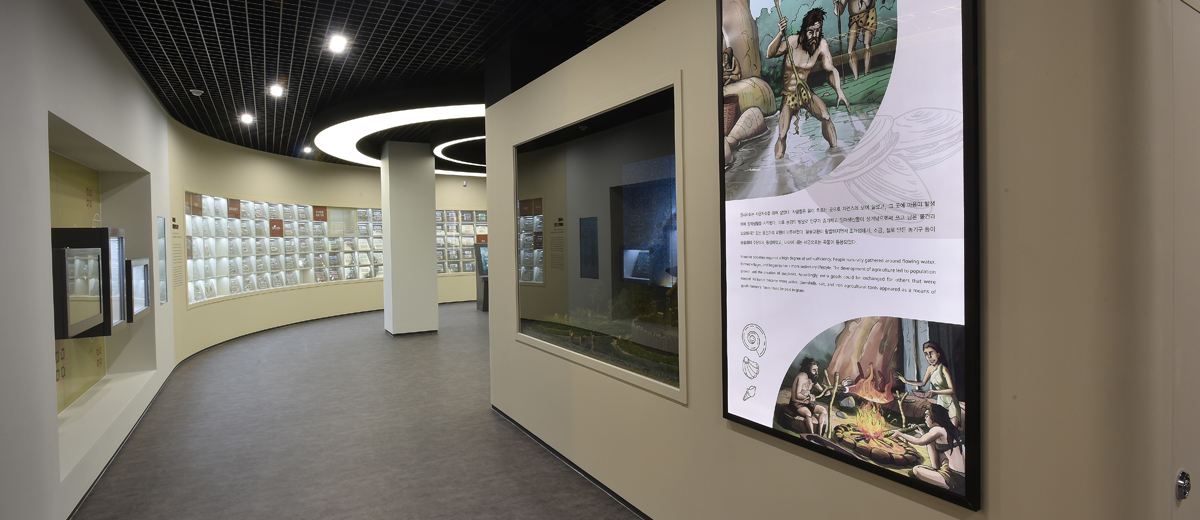
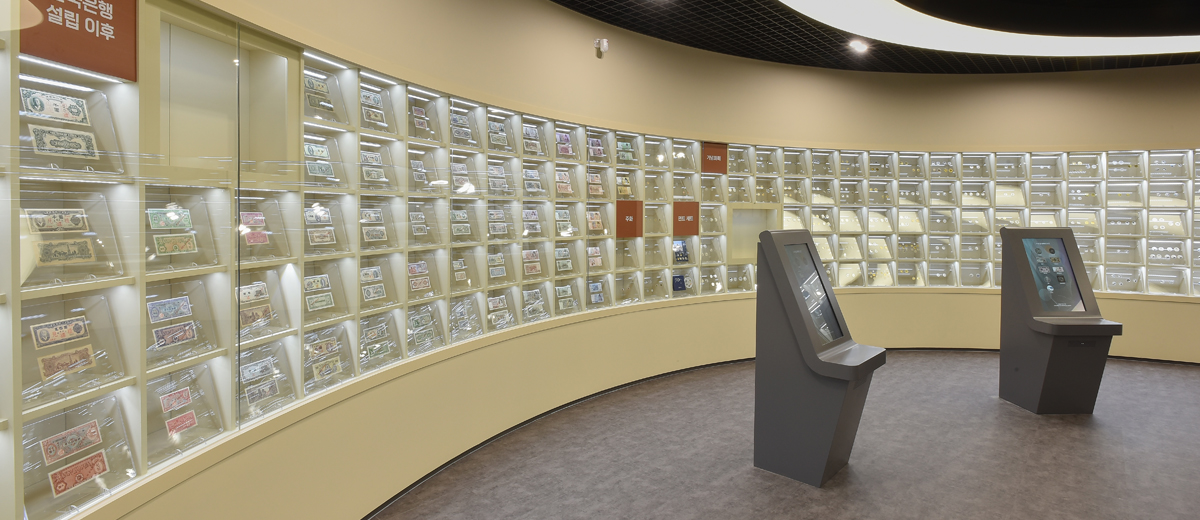
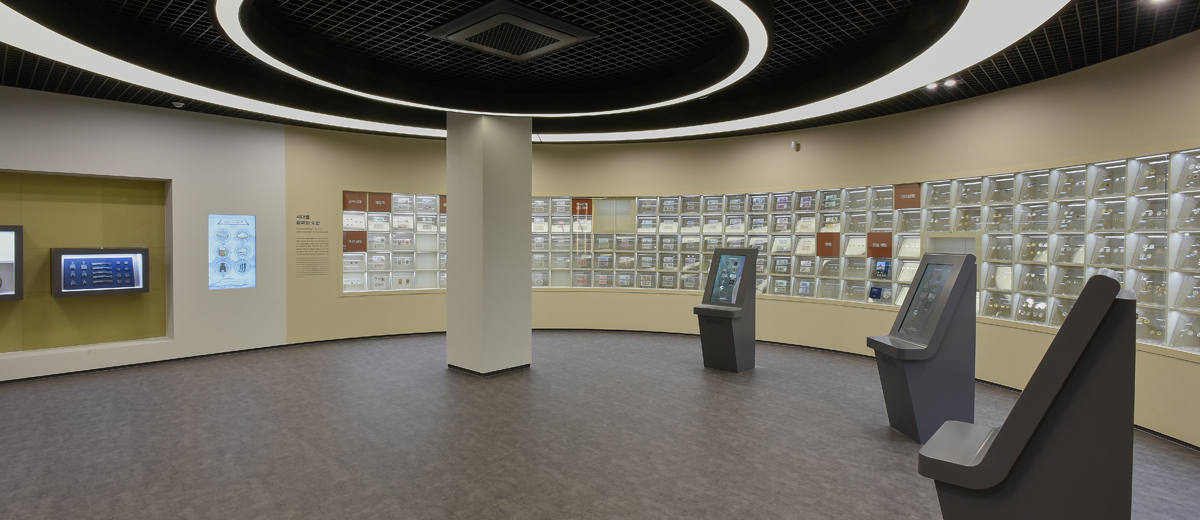
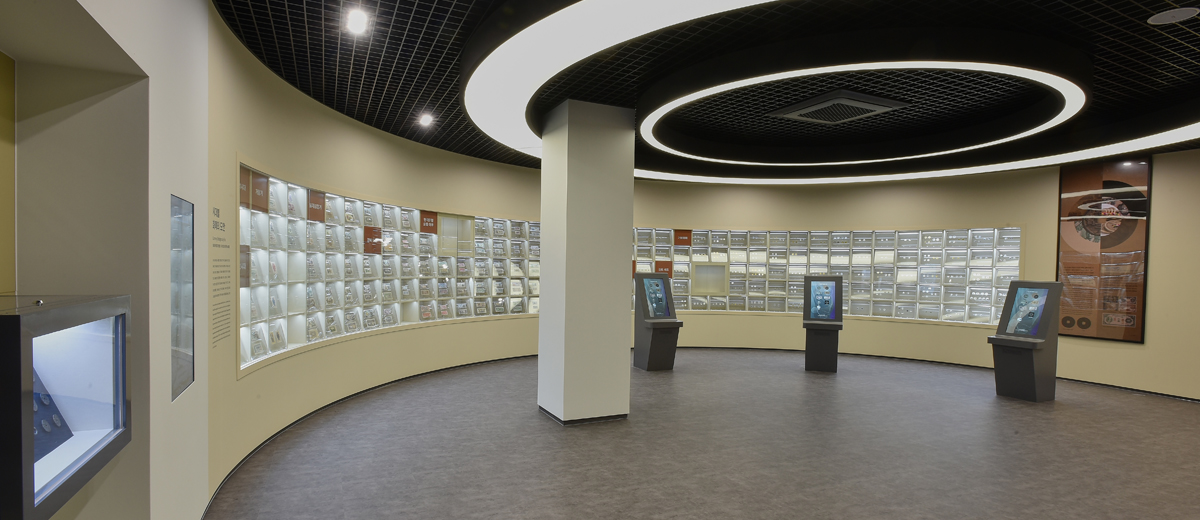
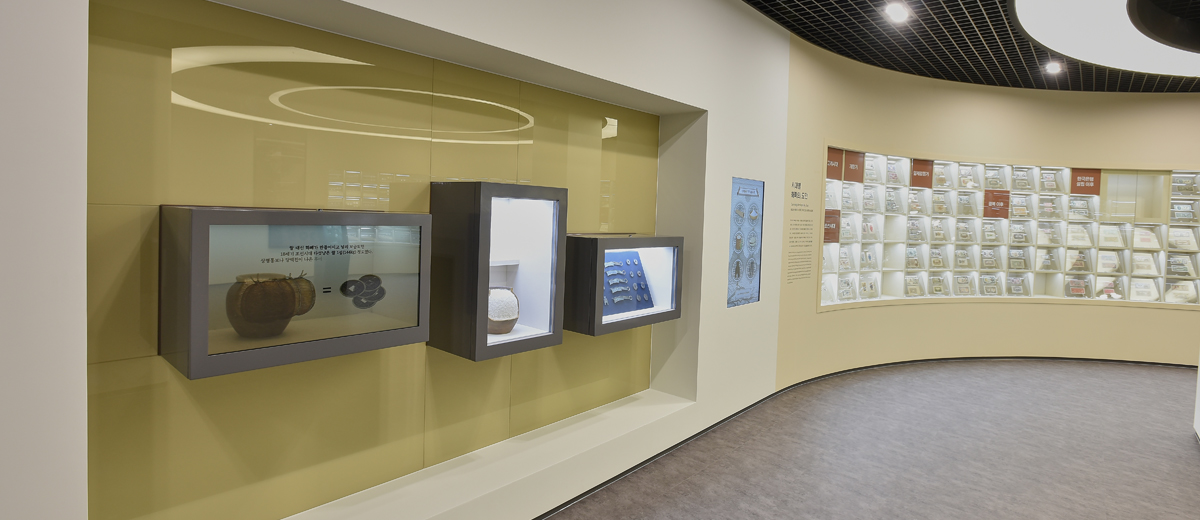

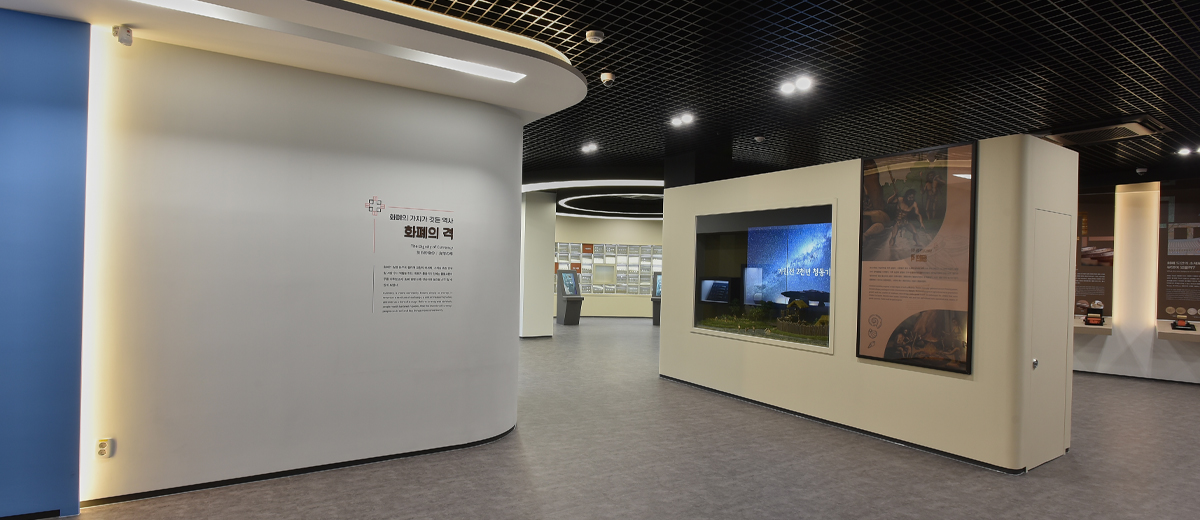
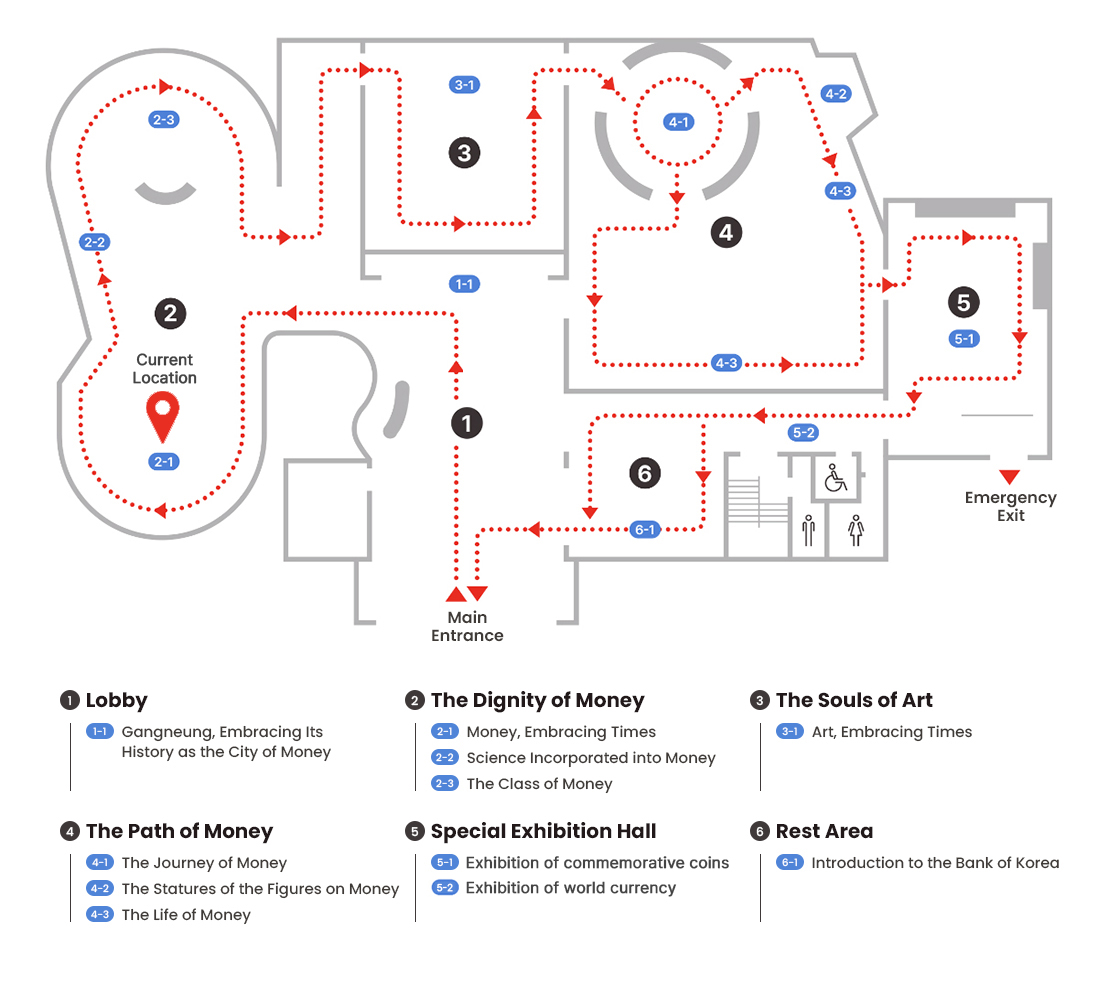
You can explore the history of money over 1,000 years through artifacts, dioramas, and videos, from the pre-currency, bartering era, and the Goryeo Dynasty, when money began to be issued, to today.
There is also a hands-on corner where visitors can make their own money.
- Bartering Before Money
- As self-sufficient primitive societies transformed into agricultural societies, people began to exchange surplus products with each other. Bartering gradually gave way to the use of commodity currencies such as shells, salt, and grain.
In the Iron Age, commodity currencies developed into metal currencies such as tool-shaped coins, knife-shaped coins, and the ban liang coins. Grain was a commodity currency that continued to be used even after money was issued.
- Designs of Coins by Eras
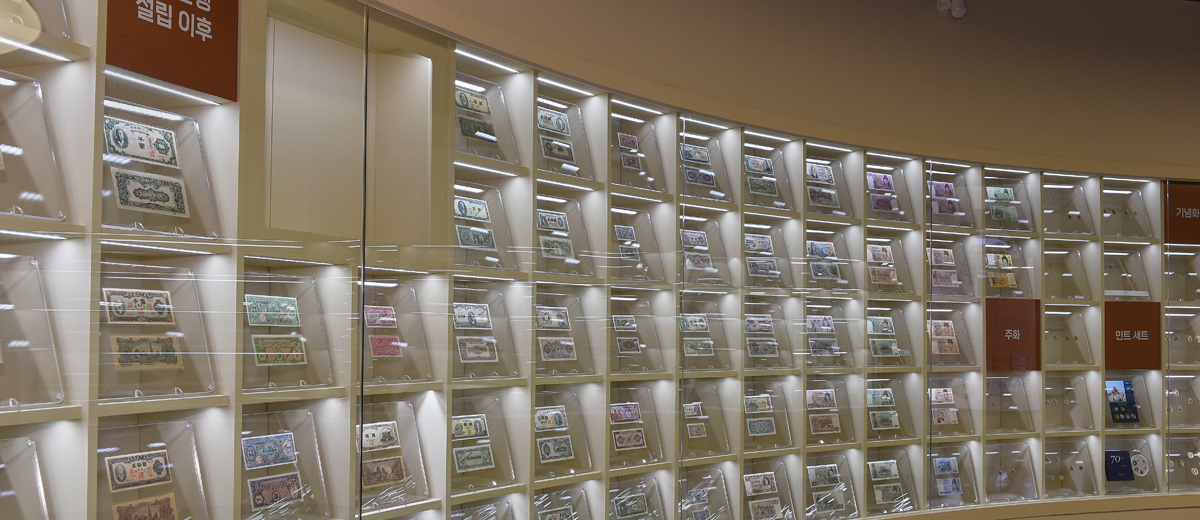
- You can see a variety of artifacts of currency, including coins that appeared during the Goryeo Dynasty, such as the Cheoljeon (Dongguk Tongbo), Sangpyeong Tongbo issued in 1678, currency during the opening of Korea and the Japanese colonial rule period, and currency issued by the Bank of Korea from 1950 to the present after independence, commemorative coins, and more.
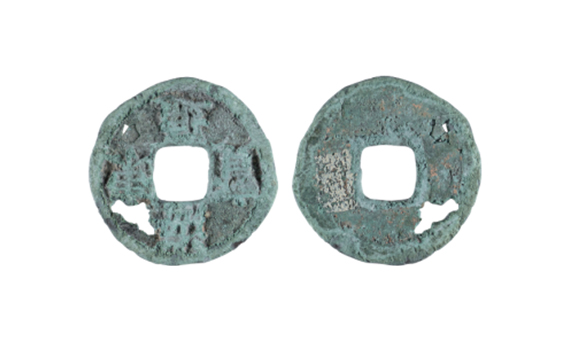
- 1102
- 21.00mm
- 2.2g
In 1097 (the 2nd year of King Sukjong's reign), Haedong Tongbo was established by setting up the ‘Jujeon-gwan’ (Minting Bureau) and became the first coin with a confirmed production year, issued in 1102 (the 7th year of King Sukjong's reign) following the suggestions of prominent figures like Uicheon, a Royal Prince and influential Buddhist scholar-monk. Goryeo minted 15,000 units of Haedong Tongbo and distributed them actively by paying them as salaries to officials. There was an attempt to promote its use in everyday transactions, even in food establishments in Kaesong, by encouraging its obligatory use instead of rice and other commodities, but this effort did not yield significant results.
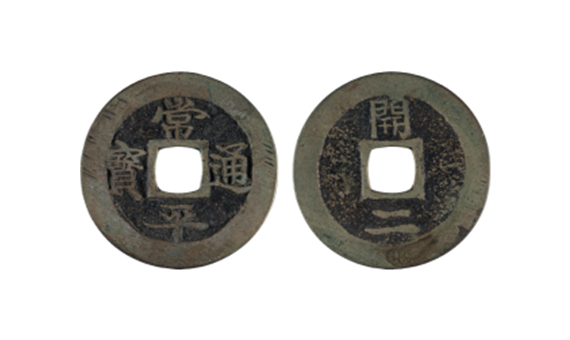
- 1679
- 30.00mm
- 7.8g
In 1679 (the 5th year of King Sukjong's reign), the first lawful money, Dangihjeon. was minted in 33 regional minting bureaus across the country in Goryeo. This coin was bigger than the previous Danjajeon (or Dangiljeon, meaning one) and to differentiate it, the Chinese character '二,’ meaning two, was inscribed on the lower part of the reverse side. Initially, it was used in conjunction with the Danjajeon, but over time, only Dangihjeon coins were used. In 1697, due to excessive minting leading to negative consequences, minting was briefly halted. However, in 1731, minting resumed to resolve the shortage of currency and to secure funds for aiding the poor affected by famine.
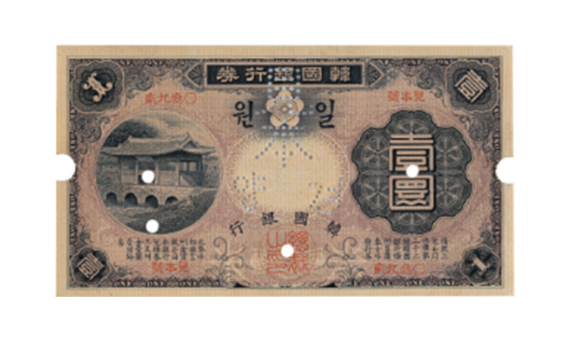
- December 21, 1910
- 130×72mm
- Paper
- Hwahongmun Gate + Watermark
In July 1909, the Korean Empire promulgated the 「Bank of Korea Ordinance」 and established the Bank of Korea with a capital of 10 million won. It began its banking operations in October of the same year. The first series of Bank of Korea notes were issued in December 1910, including denominations of 1 won, 5 won, and 10 won. However, in 1921, the circulation of these notes was discontinued.
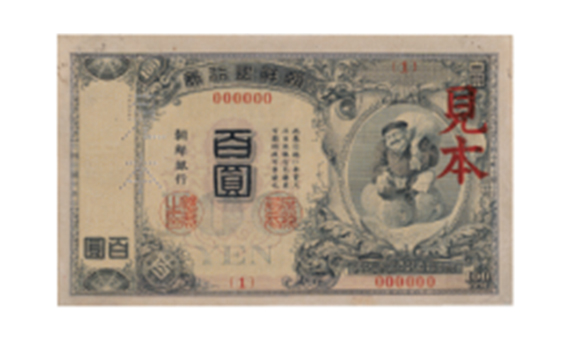
- September 1, 1914
- 1163×96mm
- Paper, Intaglio Printing
- The Elderly of Wealth Image + Watermark
In September 1914, Chosen Bank began issuing banknotes denominated in ‘won,’ starting with the 100 won note. Subsequently, in January 1915, the 1-won note was issued, followed by the 10-won note in November of the same year, and the 5-won note. The design of the banknotes featured different motifs: the 100-won note depicted the image of the Elderly of Wealth while the other denominations featured the likeness of an elderly man with a long beard and a crown, commonly referred to as the Elderly of Longevity. These banknotes were produced by the Japanese Government-General of Korea and the Japanese Inner Cabinet Printing Bureau.
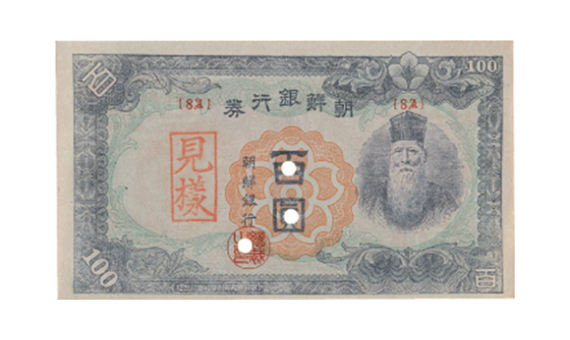
- July 1, 1946
- 162×91mm
- Paper, Letterpress Printing
- Portrait of God of Longevity + Mugunghwa (Rose of Sharon)
In July and October of 1946, Chosen Bank issued the Jung (丁, Six-design) 100-won note and the 10-won note. The designs were altered from the previous version by replacing the design of the five-petal plum blossom with the Mugunghwa (Rose of Sharon), and changing the printing method from offset printing to letterpress printing to enhance counterfeit prevention. In the following year, in June, a security-enhanced Chosen Bank issued the Mu (戊, 7th-design) 100-won note, with the color of the reverse side changed to bluish-green starting from symbol number 10.
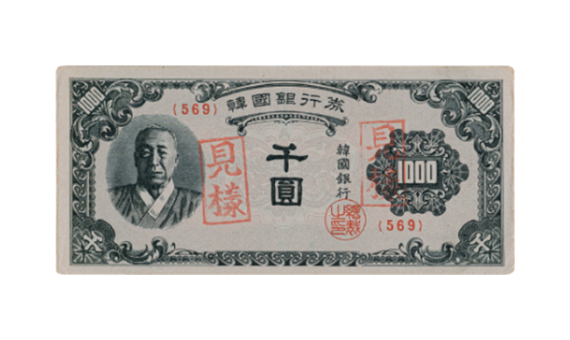
- July 22, 1950
- 171×78mm
- Paper, Offset Printing
- Portrait of President Syngman Rhee + Dangcho Pattern
On June 12, 1950, the Bank of Korea was established, but just 13 days later, the Korean War (June 25 War) broke out. On July 22, the banknotes were issued in Daegu, which served as a refuge city, including the first Bank of Korea notes: the 1,000-won note and the 100-won note, both manufactured in Japan. The 1,000-won note featured the portrait of President Syngman Rhee, while the 100-won note showcased Gwanghwamun as the design.
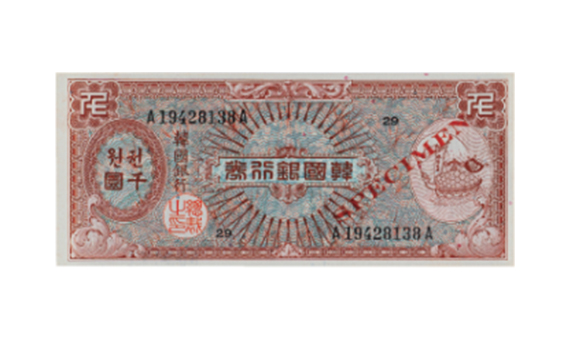
- February 17, 1953
- 156×66mm
- Paper, Offset Printing
- Turtle Ship + Bank of Korea Emblem
Due to the war-related reduction in production activities and substantial military expenditures, inflationary pressures increased in 1953. In response, the government of the Republic of Korea carried out a currency reform, where the currency value was reduced by a factor of 100, and the currency unit was changed from ‘won’ to 'hwan’. As part of this currency reform, a new series of banknotes, denominated in hwan, was issued on February 15, 1953. This series included five denominations: 1,000-hwan, 100-hwan, 10-hwan, 5-hwan, and 1-hwan notes. These banknotes were primarily manufactured by the United States Bureau of Engraving and Printing prior to the currency reform. The designs of the banknotes predominantly featured the Turtle Ship and the Bank of Korea emblem.
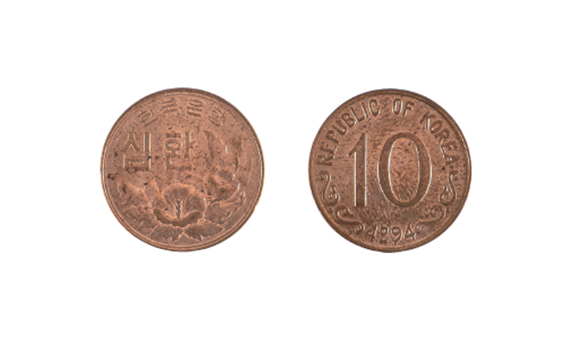
- October 20, 1959
- 19.10mm
- 2.46g
- 95% Copper, 5% Zinc
- Mugunghwa (Rose of Sharon) + Denomination Number 10
In October 1959, the Bank of Korea issued a series of three coins: the 100-hwan coin, the 50-hwan coin, and the 10-hwan coin. The 100-hwan coin featured the portrait of President Syngman Rhee, the 50-hwan coin depicted the Turtle Ship, and the 10-hwan coin showcased the Mugunghwa (Rose of Sharon). All these coins were minted at the United States Philadelphia Mint.
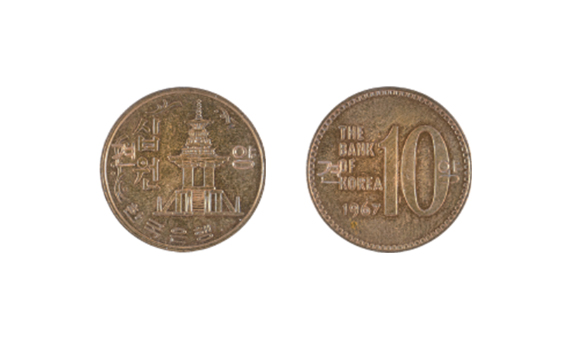
- August 16, 1966
- 22.86mm
- 4.22g
- 88% Copper, 12% Zinc
- Dabotap Pagoda + Denomination Number 10
In August 1966, a series of coins denominated in ‘won’ were introduced, including the 10-won coin, 5-won coin, and 1-won coin. These new coins were introduced to replace the previously circulated ‘hwan’ marked coins, namely the 50-hwan and 10-hwan coins, which were exceptionally allowed for small transactions after the currency reform of 1962. The 10-won coin featured the design of the Dabotap Pagoda, the 5-won coin depicted the Turtle Ship, and the 1-won coin showcased the Mugunghwa (Rose of Sharon).
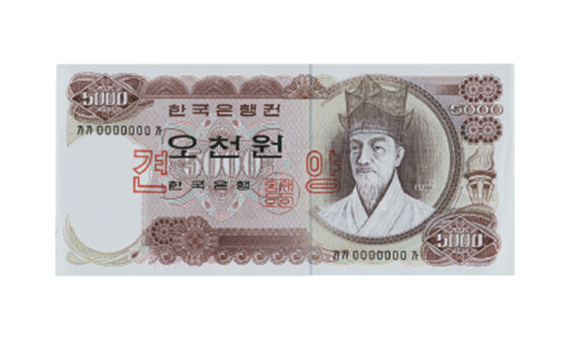
- July 1, 1972
- 167×77mm
- Paper
- 율곡 이이 초상 + 한국은행 본관
As the domestic economy rapidly developed and expanded in scale, there arose a pressing need for high-denomination banknotes. In response, the Bank of Korea issued the 5,000-won note Ga (First) in July 1972, followed by the 10,000-won note Ga (First) in June 1973. To further facilitate transactions, a 1,000-won note Ga (First) with an intermediate denomination was introduced in August 1975. During this period, there were no standardized portraits of historical figures, resulting in varying depictions of the same individuals. To address this, meticulously authenticated standard portraits were adopted as designs for banknotes. Consequently, in June 1977, the 5,000-won note Ga (First) was issued, and in June 1979, the 10,000-won note Na (Second) was released.
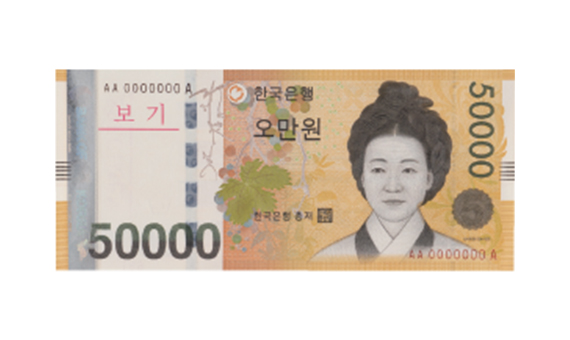
- June 23, 2009
- 154×68mm
- Paper
- Portrait of Shin Saimdang, Ink Painting of Grapes + Wolmaedo(Painting of plum branches and blossoms at night), Poongjukdo(Painting of a group of bamboos moving gently in the breeze)
In June 2000, the 10,000-won note Ma (Fifth) was issued, followed by the 5,000-won note La (Fourth) in June 2002. From 2006 to 2009, to enhance anti-counterfeiting measures and streamline the design, the Bank of Korea issued new denominations including the 1,000-won note Da (Third), 5,000-won note Ma (Fifth), 10,000-won note Ba (Sixth), and 50,000-won note. The Bank of Korea reduced the size of banknotes to a level similar to that of OECD member countries, adopted brighter and more vibrant colors, and incorporated advanced anti-counterfeiting features such as holograms and color-changing ink to make counterfeiting via scanner color printing more difficult. Currently, the Korean banknote and coin system include denominations of 50,000 won, 10,000 won, 5,000 won, 1,000 won, 500 won, 100 won, 50 won, 10 won, 5 won, and 1 won.
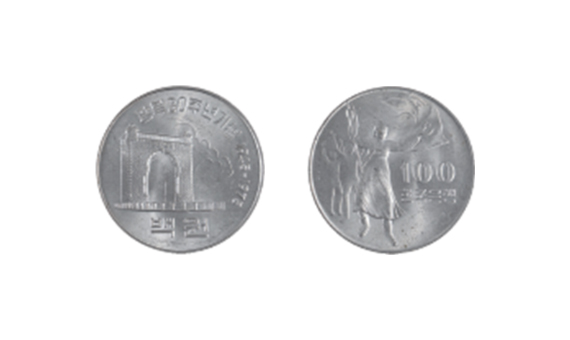
- August 14, 1975
- 30.00mm
- 12.00g
- 75% Copper, 25% Nickel
- Dokripmun (Independence Gate) + Woman Holding the Taegukgi (Korean National Flag)
In commemoration of the 30th anniversary of Gwangbok (Liberation Day) on August 15, 1975, the 100-won coin was issued on August 14th. This coin featured the design of Dokripmun, the Independence Gate, and a woman holding the Taegukgi, the Korean national flag. As the ‘Half-Millennium of Korean History Commemorative Coin,’ issued in 1971, was produced and sold mainly abroad, it was not well-known to the public in South Korea. Therefore, the Gwangbok 30th Anniversary Commemorative coin is regarded as the beginning of actual commemorative coins in South Korea.
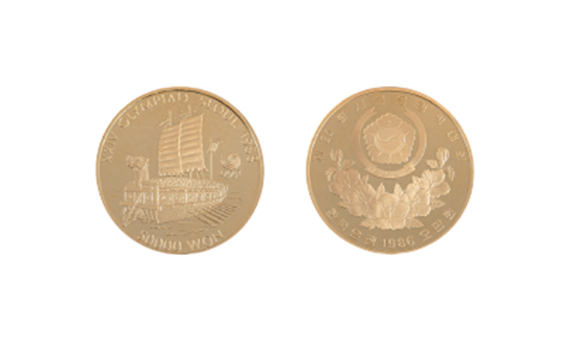
- September 30, 1982
- 35.00mm
- 23.00g
- 90% Silver, 10% Copper
- Olympic Flame + Olympic Bid Emblem and Laurel Tree
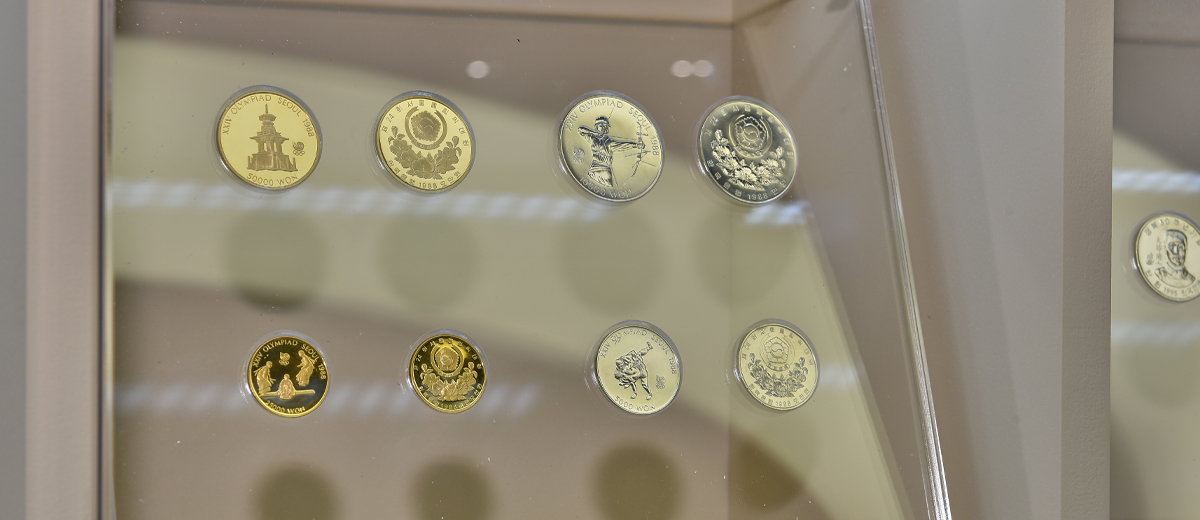
On September 30, 1981, the International Olympic Committee (IOC) session announced that the 24th Olympic Games would be hosted by Seoul in 1988. In celebration of winning the bid and to secure funding for Olympic support, the Seoul Olympic Organizing Committee issued commemorative coins on September 30, 1982, and August 1, 1983. These coins included the 20,000-won silver coin, the 10,000-won silver coin, and the 1,000-won copper coin. The designs featured the Olympic flame, the emblem of the Olympic bid, and the laurel tree.